
Written by CCIA Safety Consultant Jeff Kearnan; originally posted on Kearnan Consulting Group.
The events at Cities Church in St. Paul, Minnesota, where a group of 30 to 40 protesters entered a Sunday service and disrupted worship by chanting and confronting congregants, have raised important questions for House of Worship leaders nationwide. The incident has also prompted renewed discussion about how houses of worship can balance openness with safety, especially as coordinated disruptions have become more common across the country. Houses of Worship are increasingly recognizing that even peaceful protests can cross into unlawful interference when they enter private property or interrupt religious services.
Our resident safety expert, Jeffrey Kearnan of Kearnan Consulting Group, has written detailed guidelines that incorporate best practices, legal considerations, and practical steps for faith communities when responding to worship service disruptions.
1. Establish a Clear Access Control Plan
Houses of Worship have the right to control access to their private property. When protest activity is anticipated or when a House of Worship has reason to believe it may be targeted, leaders should consider:
Locking exterior doors once services begin
- This is a common practice in many schools and faith communities and helps prevent unauthorized entry during worship.
- The FACE Act protects the right of congregants to worship without intimidation or interference[1].
Posting private property and no trespassing signage
- Clear signage strengthens a House of Worship’s legal standing when asking individuals to leave and when requesting police assistance.
- Trespass notices are more enforceable when signage is visible and unambiguous.
[1] The FACE Act “protects, among other things, the right to freely exercise religious beliefs at houses of worship. The Act makes it unlawful to use force, threats of force, or physical obstruction to intentionally injure, intimidate, or interfere with any person lawfully exercising their rights to worship.”
2. Prepare for the Possibility of Protesters Entering Before Service
In the Cities Church incident, video footage shows protesters already positioned inside the sanctuary before the service began. Houses of Worship should plan for this scenario.
If protesters are discovered inside the building
- Do not confront or argue with them.
- Do not attempt to physically remove them.
- Maintain a calm and orderly environment.
Use worship audio to maintain focus and facilitate safe exit
If the disruption escalates or prevents the service from continuing, the worship ministry can play loud worship music through the sound system. This serves two purposes:
- It prevents protesters from dominating the environment.
- It allows congregants to exit safely and without confrontation.
This approach avoids escalation and keeps the congregation focused on safety rather than conflict.
3. Issue a Verbal Trespass Notice
Houses of Worship have the legal right to ask disruptive individuals to leave.
A simple, clear statement is sufficient
- “You are trespassing on private property. You are required to leave immediately.”
According to St. Paul Police, officers responded to the Cities Church incident after receiving multiple calls reporting the disruption. Issuing a trespass notice is an important step before requesting police enforcement.
4. Contact Law Enforcement Immediately
Law enforcement should be notified as soon as a disruption begins, especially when:
- Protesters refuse to leave after being asked and are considered to be trespassing.
- The disruption interferes with worship and is a misdemeanor offense in many states.
- Congregants feel threatened or unsafe, and may be the recipients of threats or threatening behavior.
The St. Paul Police Department confirmed they are actively investigating the Cities Church incident as disorderly conduct. Federal authorities have also stated that interference with worship may violate the FACE Act, which carries federal penalties.
Houses of Worship should:
- Call police early.
- Provide clear information.
- Allow officers to handle enforcement.
5. Maintain Nonviolence and Avoid Engagement
Houses of Worship must model restraint and avoid any action that could escalate the situation.
Do not engage in debate or confrontation
- Protesters often aim to provoke a response, positioning themselves to draw attention and amplify the disruption. They may attempt to bait their targeted audience and broadcast the encounter through live streaming to rally additional support from their followers.
- Calm disengagement protects the congregation and reduces risk.
Do not use physical force
- Physical contact can create legal liability.
- It can also escalate tensions and increase danger.
Federal officials have emphasized that intimidation of worshippers is taken seriously and will be prosecuted when appropriate. Houses of Worship should rely on law enforcement and legal protections rather than attempting to resolve confrontations themselves.
6. Strengthen Situational Awareness and Communication
A coordinated response depends on real-time information.
Recommended practices
- Equip key volunteers with radios or secure communication apps.
- Train parking lot, greeters and ushers to identify suspicious behavior.
- Establish a code phrase or signal for internal communication during disruptions.
- Assign a safety team member to call police immediately when needed.
The Cities Church incident demonstrates how quickly a disruption can unfold. Protesters positioned themselves inside the sanctuary before the service began and initiated chanting as worship started. Situational awareness is essential for early detection.
7. Conduct After Action Reviews and Update Policies
After any disruption or near miss:
- Debrief with staff and volunteers.
- Document what occurred.
- Update policies and procedures.
- Reinforce training for ushers, greeters, and safety teams.
Federal and local investigations into the Cities Church incident highlight the seriousness with which authorities view disruptions of worship services. Houses of Worship should treat these events with equal seriousness in their internal planning.
Conclusion
The disruption at Cities Church is a reminder that houses of worship must be prepared for protest activity that crosses the line into interference with religious freedom. By adopting clear access control measures, maintaining calm, issuing lawful trespass notices, contacting police promptly, and strengthening communication systems, Houses of Worship can protect their congregations while remaining faithful to their mission and values.
These steps are grounded in both best practices and the legal framework affirmed by federal authorities investigating the Minnesota incident. Preparation, clarity, and nonviolence remain the most effective tools for Houses of Worship facing disruptive protest activity.
Sources:
- ABC News reporting on DOJ investigation into the Cities Church protest; DOJ investigating after protesters disrupt service at St. Paul church where ICE field director is pastor – ABC News
- USA Today reporting on the FACE Act investigation and police response
Fox News reporting on protesters positioning themselves inside the sanctuary before service; Anti-ICE protest at Minnesota church to be investigated, DOJ says - Christian Post Anti-ICE activists storm Minnesota church service | U.S.
Have Additional Questions?
You’re always welcome to reach out directly to your CCIA Account Manager, or contact Jeff with safety-specific questions at: asksafety@ccia.com.
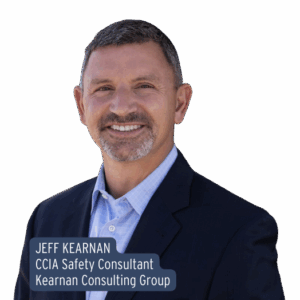
Jeffrey C. Kearnan
Kearnan Consulting Group, LLC
About Jeff Kearnan
Jeff Kearnan is a retired Assistant Sheriff, former director of Emergency Services, former Assistant Deputy Director of the Northern California Regional Intelligence Center, former USAF noncommissioned officer, holds degrees in Homeland Defense and Security Studies and Criminal Justice Management. Mr. Kearnan is a security consultant for Church and Casualty Insurance Agency and owns a successful consulting firm that specializes in expert witness testimony in civil lawsuits involving negligence, premises liability, standard of care, and police practices and use of force cases. Mr. Kearnan is called upon to perform threat and vulnerability security risk assessments for houses of worship, corporations, and government infrastructures. Mr. Kearnan uses his training, education, and experience to help houses of worship stay safe by preparing and planning for predictable surprises in way of policy, procedure, training and response plan writing.